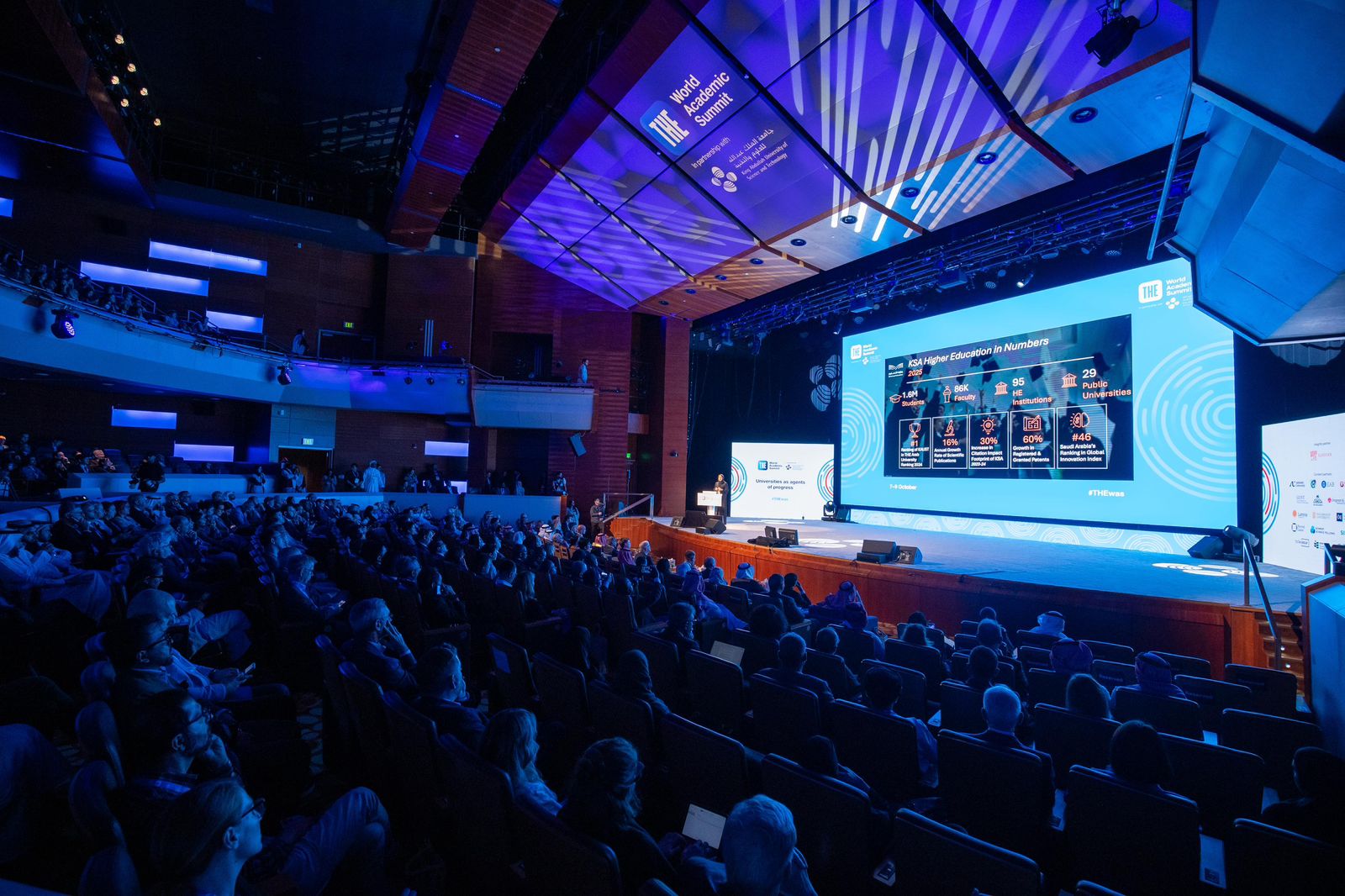
While participating in the Times Higher Education World Academic Summit 2025..
The Vice Minister of Education: Saudi universities are a key driver of progress and sustainable development, aligning with Vision 2030
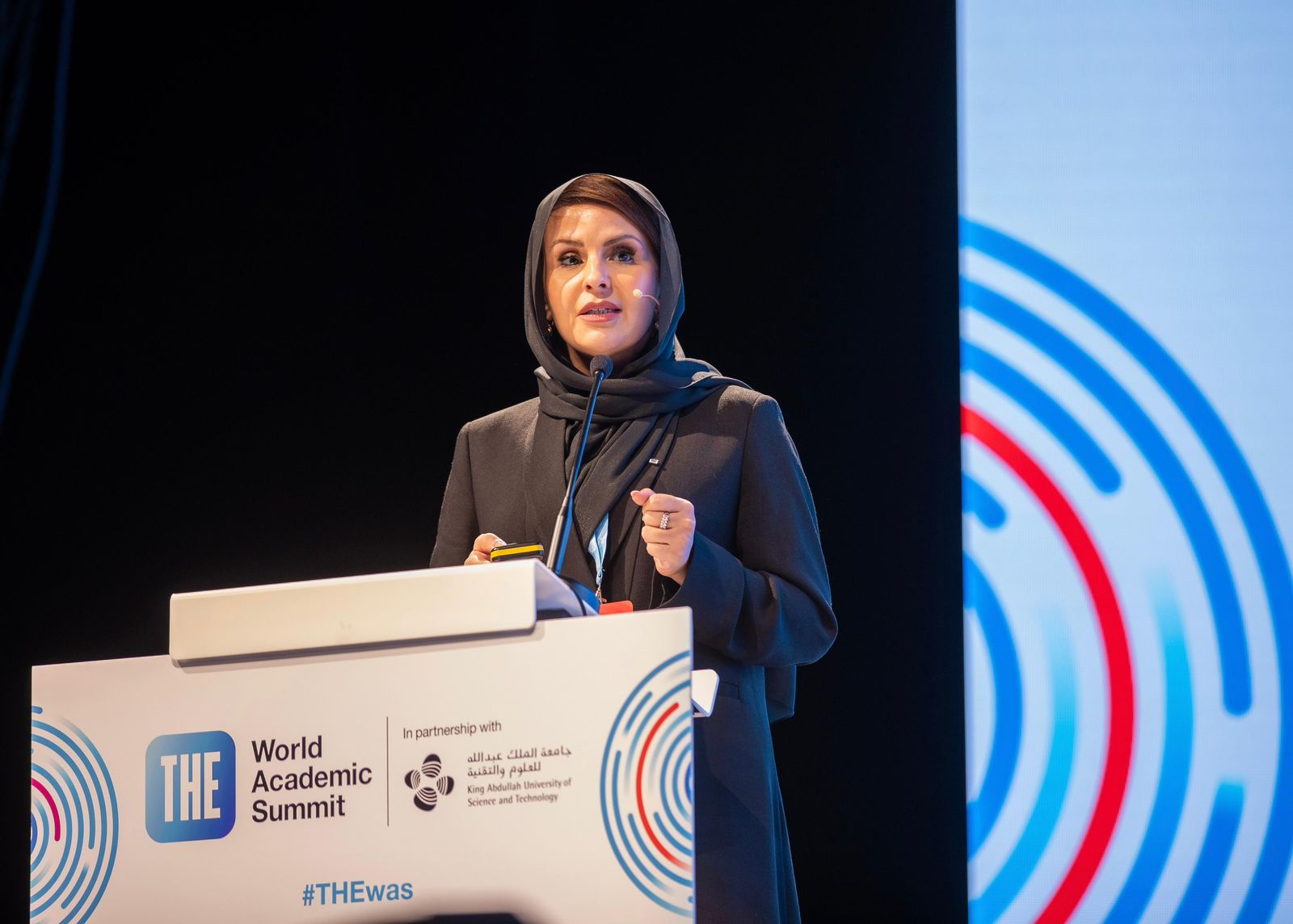
Her Excellency, the Vice Minister of Education, Prof. Enas bint Sulaiman Al-Issa, participated today in the Times Higher Education World Academic Summit 2025. The Kingdom is hosting this event for the first time in the Middle East. The two-day summit is taking place at King Abdullah University of Science and Technology (KAUST) and is centered around the theme, "Universities as Agents of Change."
The summit gathers a distinguished group of thought leaders, decision-makers, and researchers in university education from across the globe. They will discuss the challenges and opportunities facing higher education, explore the future of universities and their roles in fostering progress, enhance global academic collaboration, and support sustainable development initiatives.
In her keynote address at the summit, the Vice Minister of Education stated, "The Kingdom's educational journey began over a century ago in 1925-1926 with the establishment of the Directorate of Education. Since that time, Saudi education has achieved remarkable milestones, thanks to the unwavering support from our wise leadership. This support has led to significant advancements in innovation indicators, global scientific publishing, and patents, as well as improvements in the international rankings of Saudi universities."
Al-Issa highlighted the Kingdom's strong commitment to global education, emphasizing its partnership with UNESCO, which has spanned over 60 years and is dedicated to enhancing educational policy and research. The Kingdom extends educational support to more than 30 countries worldwide. Furthermore, the Ministry of Education is targeting 200,000 teachers for training in esteemed training institutions through partnerships with Finland and Singapore. This initiative is further strengthened by a partnership with the University of Chicago, which focuses on developing education policy programs for early childhood care and K-12 education.
Her Excellency highlighted that Saudi universities are at the forefront of progress in areas such as research advancement, entrepreneurship promotion, modern technology adoption, and the enhancement of university education. This progress is driven by key focuses on innovation, economic growth, international collaboration, and the preservation of cultural heritage. Furthermore, these institutions are initiating various strategic projects and promoting digitalization in education by creating an artificial intelligence unit designed to integrate technology into schools and universities.
This initiative includes launching a national platform for unified university admissions and activating several research and innovation centers within universities in collaboration with the Research, Development, and Innovation Authority. As a result, the quality of universities and their international rankings have improved, leading to the Kingdom achieving 14th place among G20 countries for having the best-educated citizens by 2025. Furthermore, the initiative has increased the number of scholarship students attending the top 30 universities in the world under the Custodian of the Two Holy Mosques Scholarship Program. This is in addition to launching the national platform for unified university admissions, along with activating a number of research and innovation centers within universities in partnership with the Research, Development, and Innovation Authority. This initiative has improved the quality of universities and their international rankings, contributing to the Kingdom achieving 14th place among G20 countries for having the best-educated citizens in 2025. Additionally, it has increased the number of scholarship students attending the top 30 universities in the world under the Custodian of the Two Holy Mosques Scholarship Program.
Dr. Enas Al-Issa clarified that efforts have been made to establish effective international and local partnerships between universities, industry, and knowledge institutions, both locally and globally. This will contribute to positioning our universities at the heart of national development and the knowledge economy, in line with the objectives of the Human Capability Development Program and Saudi Vision 2030.